

Intermittent Joy is a record of my current pleasures, fascinations and obsessions. It’ll cover the writing life, parenthood, pop culture, and whatever arises from this wild existence.
I’m Margaret Wappler, and I’m a Substack newbie. For now, Intermittent Joy is free. But if you want to support my work, please do. Two options: Pledge your future support or throw a tip my way (once a waitress, always a waitress).
1. Two Fridays ago, in the middle of the night, I had a return of the ghostly feeling that haunted nearly my entire April. Vertigo.
It was maybe 3am. I was asleep but rising back up into consciousness. I was on my back, and as I turned my head on the pillow, there was an undeniable lag. As if my head was still facing one corner of the room when really, I had turned it to the other. My body had simply forgotten where it was in space. Somewhere in the whorls and catches of my inner ear, a critical data point had been lost. As my brain raced to catch up with where my head physically was, a thick achy fog lowered, and the room pitched and wobbled, not spinning, but close enough. It felt especially disconcerting that it happened as I was doing nothing but transiting one stage of sleep to another. After about ten minutes of cursing the return of this thing, I willed myself back to sleep.
The ENT has determined that its vestibular neuritis, an inflammation of the vestibular nerve, otherwise known as the eighth cranial nerve. I prefer the latter term because it sounds like “the eighth wonder of the world!” Or some ridiculous holdover from phrenology. Look, when you’ve got vertigo for no real good reason, you’ll take your amusements where you can find them.
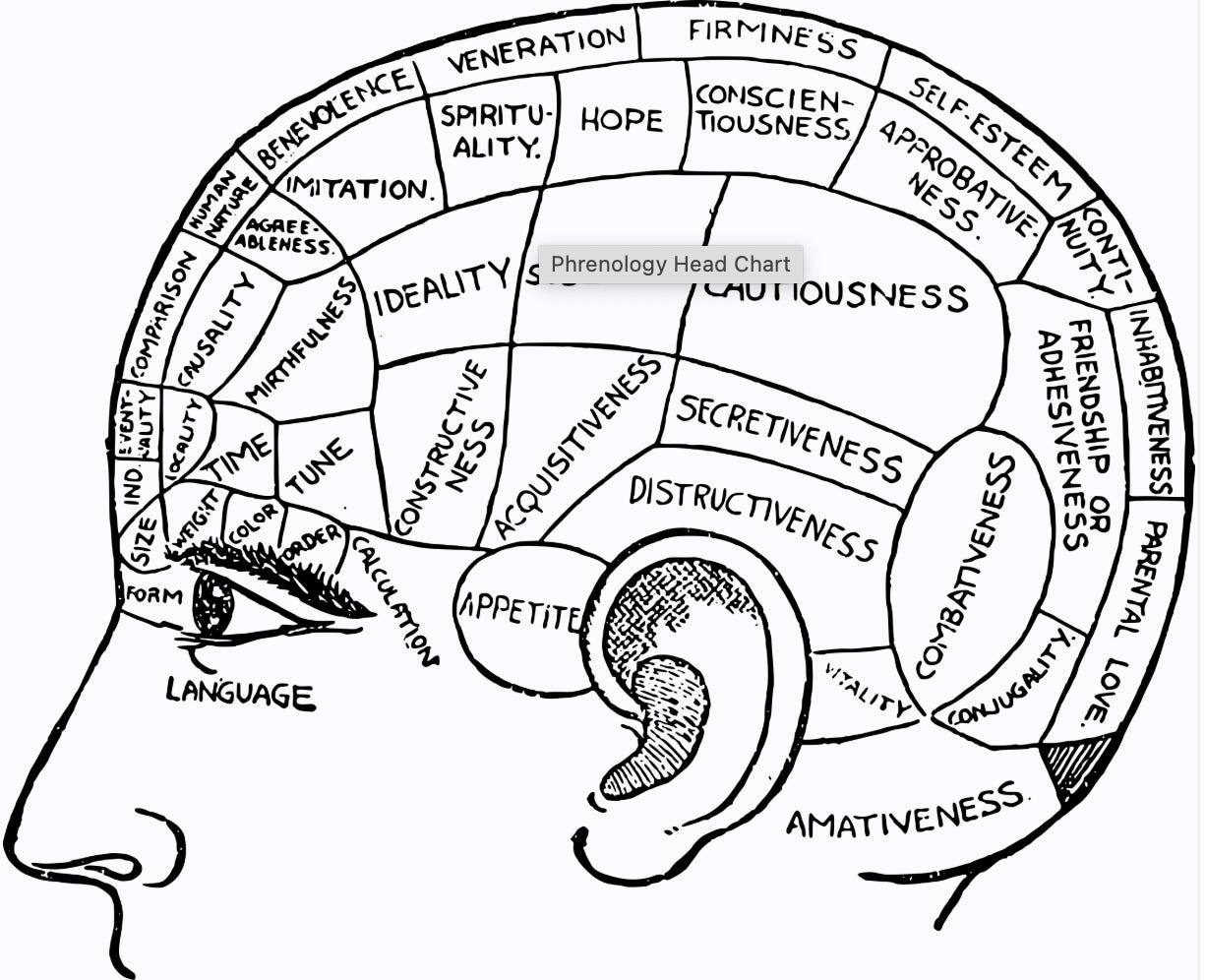
Vertigo not only took over my entire holiday weekend — I cancelled just about every plan I had — but it’s made it very difficult to focus. It’s bundled with an inconsistent brain fog. Sometimes I feel the full sun of my capacities, and then the next minute, I’m slack-jawed in the mist. Plenty of conversations have drifted by, texts have languished, details have scattered like insects, rooms have been entered and left, with no object in hand.
It’s been a frustrating time, and one of the ways I’ve dealt with it is to try to creatively utilize it. I’ve trained myself to notice things, both personal and cultural, where some sort of amnesia or forgetting is at play. This kind of exercise, to me, is the joy of what I’ll call prewriting. We look for patterns to create not a rigid sense of order but an idiosyncratic, transcendent system of meaning. On the many days where I couldn’t write more than an hour or two, I created a forgetting-sized net for collecting amnesiac butterflies. Now I’m pining them to this particular Substack wall.
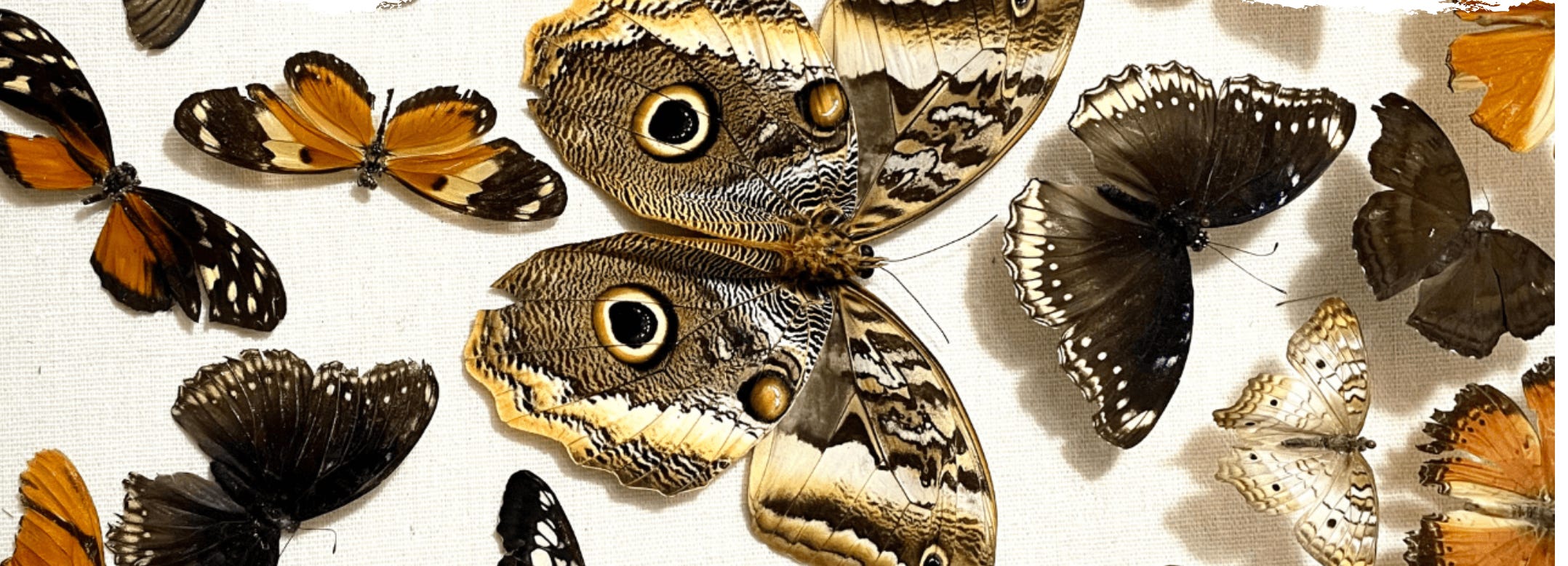
2. A Brief, Incomplete Taxonomy: Forgetting can be voluntary or involuntary. Forgetting can be a delicious surrender, a survival method, or a maddening hunt for information that no matter how diligently you fish, your mind just won’t deliver.
3. For several years, I stopped myself from remembering about Michael Jackson. From thinking about him at all, despite rollerskating every weekend of my 7-year-old life to “Thriller.” I knew the gist. At one point, in my music reporting days, I forced down a read of the finer details, but I’d long ago willingly given that part of my memory over to cobwebs. The gist is disturbing enough.
But after I fell into Tracie Morrissey’s exhaustive Substack on the accusations against Jackson and the legal subterfuge his massive fortune enabled, I had to think about it again. As Morrissey writes, Jackson has reemerged in the cultural consciousness at a loaded time. As the full Epstein files remain in a political logjam, possibly forever, “Michael,” the biopic is smashing box-office records. Variety speculates that it could make $1 billion globally by the end of its run.
“Michael” is the populist’s omission of history. It is hyper-forgetting. Critics hate it but viewers from all generations and backgrounds don’t care and seem to prefer that the ugly parts of his story have been excised like mold on cheese. “Michael” is comfort viewing, a tour through Jackson’s extraordinary career before shit got real weird. Though of course, it was all weird for a long time (Neverland Ranch, Bubbles the Chimp, the surgeries, the marriage to Lisa Marie, etc etc). In its current form, the movie cuts off at 1988, five years before any accusations against Jackson made headlines. Wildly, “Michael” used to have a third act all about the mess, but a confidentiality agreement between Jackson and one of his accusers rendered that version dead, and the film was drastically altered. We’ll never know (or not anytime soon) how that original movie, with scandals intact, would have done at the box office.
Tracie Morrison’s piece, which details every single ghastly accusation, is a way of saying: Remember? We can’t forget. Personally, I could only absorb the horrors for so long. I quit reading about 70% in.
4. Forgetting is survival. We all have to forget that horrific things happen all around us (and also to us) all the time. To go back to the Epstein files for a moment, one of the many challenges about it is the integration of the information that so many people in power have done heinous unspeakable things. How do we store that information? Where does it go in our minds, our bodies? How do we live with it every day? Part of the challenge is that the things are speakable. They don’t boggle the imagination. Horrific crimes against our most vulnerable are part of the human story. After the crimes themselves — and the perpetrator remains our relative, our president, our larger-than-life pop star — the question is what to do with that knowledge. Before “forgiving” or “healing”or “moving on,” what does just living with this knowledge look like? Sometimes, we choose a practical and temporary forgetting.
5. A couple of years ago, when I was driving my son, who was 6 at the time, the opening slithering percussion of “Beat It” came on the radio. Silas — and this isn’t just motherly bragging — has an excellent ear and so I knew, I knew that he wouldn’t let this song go unnoticed. It’s clear when he’s enraptured because he stops moving. He’s a bustle of fidgets, until the beat drops. Or a crystalline voice cuts through the fog. Then his body stills, like he’s listening with every limb and toe. Sure enough, by the song’s end, he asked about it. I said, “yeah, that song was huge when I was a kid. That’s Michael Jackson.” And I could feel him considering asking more about who this guy was, but my casual words about “Beat It” were designed to dissuade him. Silas has long thought that most cultural products from my childhood are irredeemably dusty. He once asked me if everything was in black and white when I was a child. I should’ve just said yes; how long would he have believed me?
Thankfully, within seconds, he was distracted and didn’t ask about Jackson. And of course, there is a developmentally appropriate way to explain that I don’t really enjoy listening anymore because he’s a bad man, or something to that sort, but I was relieved not to have to say any of it at all. It isn’t exactly true. In that moment, I was astonished by how impeccable Jackson’s performance in “Beat It” is, and will always be.
6. In my late twenties, I realized with brutal disappointment that I wasn’t always a steel trap when it came to keeping secrets. I hurt a couple of people I loved by leaking their info, so I resolved to do better. But I didn’t really have a firm idea about how to do better. Simply keeping my mouth shut didn’t seem like enough of an insurance plan.
Life continued, secrets were told to me (and I shared my own), and at some point I realized that in order to reliably keep these secrets, I was engaging in what I’ll call active forgetting.
Active forgetting works like this: Someone tells you something lurid, gossipy, jaw-dropping, self-compromising in confidence. And during the conversation, you are totally engaged, comforting your friend, or offering perspective or whatever it is they are in need of, and then, over the course of two or three days, whenever it comes up again in the brain, you say, now forget it. FORGET YOU KNOW THIS. Sometimes I’ll picture a steel fortress around the central picture of the secret. Over the course of several days or weeks, I’ll just steer my brain away from the fortress.
It works, most of the time. After a while, I just plain forget what they told me — though I don’t totally forget. It’s more like it’s in deep freeze, able to be quickly thawed if they bring it up again. Maybe the deep freeze/almost forgetting works because it’s not my secret. I’m usually not directly emotionally invested but there’s also usually no mystery about why they did the thing, or felt the way they felt. It’s much easier to see into the people I love and understand their motivations. Sometimes I apply active forgetting to my own life — especially for embarrassing moments that mean nothing more than I’m alive and imperfect, or dumb arguments with my husband that were overinflamed— but my success rate with myself is much spottier.
7. A quick seasonal guide to forgetting:
Fall: Joyous Remembering: Nostalgia, Fading Memories
Winter: Painful Remembering, Grappling, Eventually Letting Go
Spring: Healing, Reconciliation
Summer: Forget about that shit, baby!
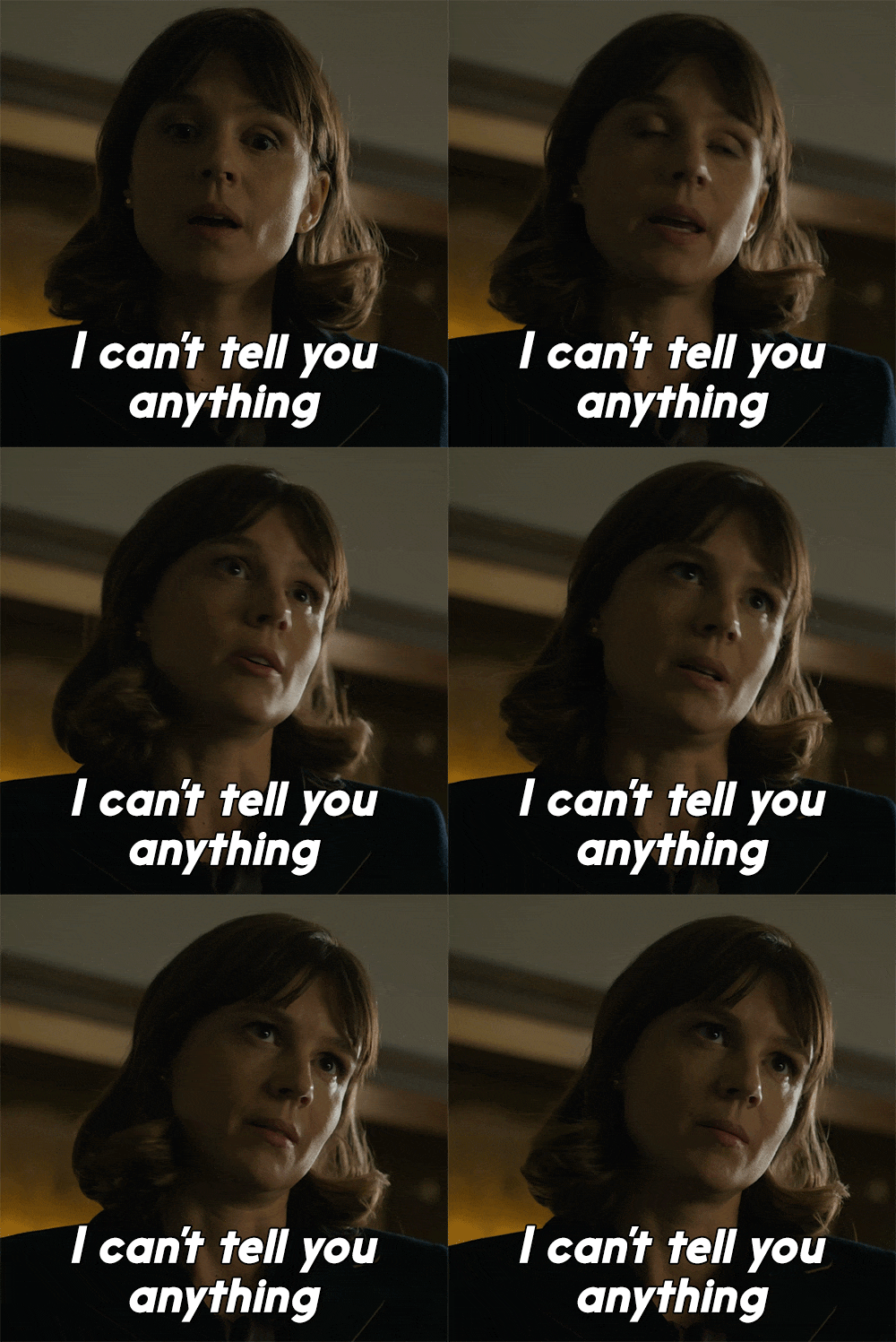
7. I love an amnesia plot, provenance of the soap opera, science fiction, thriller, and any other entertainment that wants to announce: I’m fucking unhinged!! Enjoy this brief scene from my favorite amnesia movie:
Wow. What a lovely read. Your description of that oh-so-fun, x and y axis anarchy, AKA vertigo, was sublime.
Some things are better to read about than experience…[insert a joke about the Trump years joke here.]
This was wonderful: “My body had simply forgotten where it was in space. Somewhere in the whorls and catches of my inner ear, a critical data point had been lost. As my brain raced to catch up with where my head physically was, a thick achy fog lowered, and the room pitched and wobbled, not spinning, but close enough. “
Thanks for adding some beauty and clarity to a wet, windy, and chilly Dublin morning.
Thanks, Stephen! Vertigo is so much better to write about than experience. Did you move to Dublin??